Saturday, March 16, 2013

Poem for My Cousin on Her 70th Birthday

Barbara has been a flight attendant and a toy designer. She was a preemie. She paints in oils, does a lot of yoga, and is creative in everything. 


To Write the Number 70

                                    - for my dear Barbara, on her birthday

To write the number 70 we begin
with a short lateral line, a line
that goes from a premature Point A
to a paint-drenched Point B, knowing
Points C through G (or perhaps
as far as K) are still to come.

We have much to pack on that line. We could
make paper dolls . . . the two of us at three
in costume, the two of us at ten, en pointe,
blank paper dolls for you to dress in fashion
for the teen and college years, then one of you
perfectly turned out for flight, and the two of us
modeling skirts made with Singer and vodka.
The maternity doll,  the do-it-yourself doll,
the designer doll, the doll designed,
the decorating doll, the homemaker doll, the widow
doll, all beautiful. And then the sister dolls
again, in gardening clothes, wirelessly connected.

To write the number 70 we then
make a graceful downward line
(like a downward dog, not a downward
spiral), stopping when we want to and not
a millimeter before or after. We are in charge.
It is our space and our number.

Then it is time to move our brand new
pencil, sleekly sharpened, up to the top.
Always aware of our handwriting, especially
on important occasions, we assess
the seven, the lifeline and its symbols,
the texture of the paper, the light,
the silence (or lack thereof), whether or not
our bangs are in our eyes, if we’re hungry
(if we are, we take a moment to contemplate
popovers), and then we make our move:
not a zero—never a zero—but a perfect oval,
bringing everything together, just for a moment . . .
before we set ourselves free to live some more.


                                    Susan Luckstone Jaffer


Wednesday, February 20, 2013

Three Months With Sandy

She arrived around the time of the hurricane, a somewhat small, pretty white cat with large black markings, dainty paws, and horribly infected eyes. She moved into Bonesy's dog house on the porch. Bonesy, our very territorial outside cat, moved out without challenging. This surprised us, but maybe Bonesy knew how sick the newcomer was and wanted to steer clear of her.

Because of the hurricane connection, my son named her Sandy. I wasn't crazy about the name because she didn't look like a Sandy. But I used it often, and hope she eventually recognized it. Every cat should have a name.

She was feral, and we couldn't get near her. But she stuck around, dining on the porch, occasionally curling up in an old tire in the sun, and spending her nights in Bonesy's dog house. We set up another dog house for Bonesy, in the shed across the road. But it wasn't satisfactory. In fact, nothing was satisfactory about the situation. We didn't like Bonesy banished to an outbuilding, and we couldn't sit by and watch Sandy's eyes get worse. As it was, they looked so bad we feared she might have lost some vision. Plus cold weather was coming, and my daughter-in-law observed that Sandy's breathing was congested. Who knew what would happen to a sick cat in winter?

We've had a lot of cats, and in one way or another they were all rescues. I belong to Alley Cat Allies, and I'm familiar with the practice of trap, spay, and release/return. We did it ourselves years ago with several strays. My life is full of happy cat stories. I decided to trap Sandy and get her spayed. I was certain how this would go. She would recuperate in a dog crate in my guest room, where I would see if I could tame her. The vet would treat her eyes, and give her a rabies shot, and after two or three weeks I would find her an animal-loving farmer who would be happy to have a nice spayed barn cat.

I set up a Havahart trap on the porch, and as I watched Sandy check it out from all sides, including the top, I realized her vision was just fine. Good. We'd get the infection fixed, and she'd be in great shape.

At the vet's, Sandy tested negative for feline leukemia. But she had fleas, the eye infection, an upper respiratory infection, and a bad infestation of ear mites. She was treated for all this, given the rabies shot, and spayed. I picked her up that afternoon.

After a couple of weeks Sandy was tamed to the point where I could pet her on her head. Even though the dog crate was fairly large, I felt she needed some exercise and would be less stressed if she had some freedom. So I opened the crate and let her have run of the room. The way I envisioned it, I would spend some time in the room with her every day, perhaps reading on the bed. Sandy would gradually come closer and closer to me until we were cuddled on the bed together. It was a nice vision.

What actually happened was that she spent most of her time hiding under the bed. She was up on the bed when I wasn't there; I could tell because the bloody discharge from her infected eyes was on the pillows. I was sure it was elsewhere in the room, too, so I reluctantly lured her back to the dog crate.

A week or so later we were back at the vet's. The eyes hadn't improved, nor the congested breathing, and the ear mites had returned. Another round of treatment ensued, and this time the vet told me I'd have to put ointment in Sandy's eyes twice a day for 10 days. This took the taming effort up a notch or two.

After the 10 days, I could pet her from her head to her tail, but her eyes were no better. In fact, they looked so raw that I was glad I could stop torturing her with the ointment. I consulted with another vet, who told me both the eye and upper respiratory infections were caused by a herpes virus that should have been treated when she was a kitten, long before she showed up on my porch. The vet said I could try giving her 500 mg. of l-lysine twice a day, dissolved in food, for a month.

So I did. To me, lysine tastes vile, but Sandy was so good about eating it in her food. She loved her food, canned and dry. I kept her supplied with the dry as soon as she finished each meal of canned. Once a day I tossed her favorite chicken-flavored Temptations treats into the crate, and she would make a tiny pouncing motion, or step on them—fast—with one paw. Her reflexes were excellent. This was her only play time.

The dog crate was lined with a piece of carpeting. It held both food dishes, her water dish, a small litter box, and a large pillow. My daughter-in-law hung a little toy from a string on top, but Sandy never played with it. A couple of times I put a furry mouse toy in the crate, but both times later found it outside. I got the feeling it landed there not from play, but from being banished.

Sandy could have escaped from her crate countless times, but she never tried. When I opened the door she would come to the edge of the opening, maybe put one of her little paws outside the crate, and then stop. I was able to pet her from her head to the tip of her tail now. She would purr and purr. But if I tried to pick her up, ever so gently, she would ever so delicately raise her feet over my hands and back up into her crate.

After a few weeks of the lysine, I had to reluctantly conclude that it wasn't helping. I read up on the herpes infection, and learned what the vet later confirmed: The infection was highly contagious. It could, with no guarantees, be treated with some pricey antivirals, but Sandy would remain contagious as she could shed the virus even in remission. And a remission, if it came, was almost certainly temporary. The virus was likely to reactivate again and again.

There would be no kindly farmer and community of barn cats for Sandy. There was no hope of integrating her into my own family of cats. We couldn't even consider releasing her to go back to living as my porch cat. For one thing, she could transmit the herpes infection to Bonesy. For another, Sandy's illness would make her vulnerable to predators and a poor candidate for winter survival. I painfully came to the realization that there was no place for Sandy.

When you tame an animal, when you succeed in gaining its trust, the absolute last thing you want to think about is having that animal put down. This isn't the first time I've talked about the end-of-life decision in this blog, and it's always a complex, multi-layered, knotted issue. Unlike the decisions I faced with my dogs, Angel and Wolfy, this decision was all about Sandy. I wasn't suffering. Yet in a way I was.

My son urged me to put Sandy out of her misery. But how miserable was she? Certainly a human with eyes as raw and oozing as Sandy's would be miserable indeed. But she had lived with this her whole life. Does a cat get used to infected eyes? I have no idea. I did know this: Sandy ate well and enjoyed being petted. I also knew she wanted more--not more food, but more attention. And I knew, too, that she didn't groom. I took this as a sign that was stressed, but the vet told me some cats simply do not groom.

One thing was not debatable: Sandy was alone. I visited several times a day, changing her water, bringing food, cleaning the litter box, petting her. But then I'd leave. Sandy was a quiet cat, never keeping me awake at night, never voicing her displeasure at anything. But she always meowed, just one sad sound, each time I left the room. She could hear me talk to the other cats--in the bathroom next door, in my bedroom on the other side of of her wall, out in the hallway. Did she interpret my tone of voice as cat-conversational? I wondered.

From the way I agonized over all this, you'd think Sandy had been a beloved family pet for years. The truth was, I did love her. But I also felt a crushing responsibility for her. Crushing responsibility. I'm trying to avoid the word guilt.

It should be hard to feel guilty about something when you can't think of a thing you would have done differently. But somehow we manage it. When a pet of long standing dies, we say, "She had a good life." But this bit of comfort didn't apply here. I felt as though Sandy had no life.

It took me a long time to make that final phone call to the vet. All the while, I went over and over Sandy's situation, past, present, and future. I couldn't second-guess my decision to trap her, although as it turned out in the end, that led to her death. As the vet told me, after she'd put Sandy down, the cat never would have survived the winter outside. She also told me I gave Sandy a warm place, a bed, and an endless supply of food. That was good, she said. But if it was good, I thought, was I right to end it? 

What it came down to in the end was my reluctance to sentence Sandy to any more time alone in that crate. To me, the crate looked worse and worse every day. My attempts to clean it scared her. White fur covered the rug and pillow like a thin pelt. Cat litter landed not only on the rug, but on the tarp as well. Her frequent sneezes sprayed the tarp in an 8" border around the crate. I kept her dishes and litter box clean, and gave her the best care I could, but it all began to seem like an exercise in futility. Sandy was in quarantine.

"Aunt Deer will take care of her." A few weeks after my granddaughter said this to me, I was as ready as I would ever be. "Aunt Deer" was Lizzie's name for my daughter Jill, who had a real gift for understanding and loving animals. I had every reason to believe in the survival of animals' spirits as well as our own, and every reason to believe Jill would indeed take care of Sandy. I told Sandy I was sending her to Jill.

This decision was so wrenching that I had to break it down into pieces. I would call the vet. On the appointed day I would feed Sandy some tuna—some real tuna. Somehow I would transfer her from the crate to a large carrier. Then I would take her to the downstairs bathroom, where I would close the door and open the carrier, giving her the first real freedom she'd had in a long time. She would walk around and check everything out, and if I were really lucky she might jump into my lap.

Maybe Sandy's psychic sense made her refuse her last meal. I did manage to get her into the carrier, but knew even if I opened it, she'd never step out into the bathroom. It would have been all too scary for her. No tuna, no freedom, no lap.

But then, some things just don't go the way you planned.


Sunday, January 13, 2013

Fashion, Frugality, and Fun

I was talking on the phone with my friend Astrid this morning, and I mentioned that most of my clothes come from the Salvation Army. Astrid hasn't seen me in over 50 years, and when we hung up I thought, she probably thinks I look like a bag lady.

Astrid (hope you're reading this), I don't. At least I think I don't. I don't pick out just anything from the Salvation Army. Although I'm definitely not a fashionista—my idea of high style can be found in an L.L. Bean catalog—I admit to a certain snobbishness about labels. This side of me comes out in thrift shops, where I ferret out the best pre-owned clothes a store has to offer (in my size). I love the hunt.

Now, I don't live in an affluent area, so I'm not going to find anything you might see in Vogue. But that's okay, because I probably wouldn't recognize those labels anyway. My idea of great scores are Columbia outerwear, Ralph Lauren jeans, Caribbean Joe capris, or anything from Chico's. I did find a Nicole Miller dress once, and I attended an upscale wedding in my royal blue Liz Claiborne number, but sadly I've "outgrown" both of these.

At this point in my life I'm grateful for my frugal nature, and grateful, too, that buying used clothing is more of an entertainment than a hardship for me. Even when I had more money than I do now, I was never comfortable spending a lot of it on clothes. My mother-in-law (who wore only Belgian shoes—that should tell you something) tried to train this out of me, but never really succeeded. Once her son and I moved to the country, far from Bergdorf Goodman and Saks, she gave up.

I've found when it comes to Goodwill and the Salvation Army, there's no middle ground; people either love the hunt or are repulsed by it. In my family we have both factions. I discuss my thrift shop triumphs with one, and remain silent with the other. I wonder if the latter group ever questions how I can afford the designer silk scarves I've been sporting lately. Little do they know I paid $1 each.

Monday, December 31, 2012

The Other Thing I Made This Christmas

Several things, actually, but all in the same vein. I'd been thinking about possibly passing on my first few cookbooks to my daughter. With that thought in the back of my mind, I accidentally happened upon the idea of covering old, meaningful books with handmade slipcases for gift-giving. I jumped on it. Not only did I love the look, but this was my big chance to buy gorgeous scrapbooking paper without guilt (I'm not a scrapbooker) and play with it!

I waited for a half-price sale on the paper. With AC Moore and Michael's, one doesn't have to wait long. I chose a "Garden Tea Party" pad of cardstock. I loved the subtle colors and the "tea stains" on many of the prints. I also bought a pack of inexpensive decorative scissors, acid-free glue, and permanent double-sided tape. (After the first one, I abandoned the glue and used only the tape.) My small X-Acto paper cutter (like a big office model, only smaller) came in very handy.

I made three slipcases for my daughter to cover those first three cookbooks: Ladies' Home Journal (see text below), New York Times, and Amy Vanderbilt's. And I made one for my cousin Barbara to cover a used copy of Tofu, Tempeh, and Other Soy Delights, a Rodale cookbook I contributed to (20 tofu recipes) decades ago.

Incidentally, I bought used copies of those first three cookbooks to replace the copies I gave to my daughter so I wouldn't be without the favorite recipes myself. But she has the ones with all my handwritten notations.

I had a lot of fun doing these.....clearly, playing with paper hasn't lost its charm.


Sunday, December 30, 2012

Something More Cheerful for the New Year

Last year for Christmas I decided to make aprons for my daughter and her family. I would use printed fabric for her and her daughter, and matching denim ones for her husband and his two daughters. I had a lot of enthusiasm for the project until I saw what denim is selling for these days. So that was last year, and after the project hit a couple more snags, the aprons never got made.

This year someone posed a question at one of my online hangouts, asking if anyone was making Christmas gifts. One of the responders posted a link to instructions for making aprons out of men's shirts. She posted two links, actually—the first, where the idea seemed to originate, was a Russian website. The second was a blog where someone was kind enough to take step-by-step photos of the process.

Off to the Salvation Army I went, where the shirts cost me $2.50 to $3 apiece. I ended up buying more than five because it took awhile to find one long enough for Chuck (I'm still not certain I did). One of the ones I bought for his apron and rejected after I cut it was a 100% Irish linen shirt from Banana Republic, the back of which is now serving as a wrap for Bonesy-the-outside-cat's heating disk.

The process is simple: You cut off the back and the sleeves, leaving the double-seams on the front so those edges don't have to be hemmed. (Most dress shirts—excluding the linen one—are so tightly woven that you can cut right up to the seam without worrying about unraveling.) Then you cut diagonally from the collar to the underarm, leaving a bit of the shoulder. This bit of shoulder will disappear once you turn it under, twice, to hem the diagonal cut.

Then all you have to do is cut ties, using the length of the back. I added a patch pocket to each, using fabric from the other apron backs. It would be a nice idea to cut the ties on the bias, but I didn't do that. I've since seen instructions that have you sew bias binding around the entire edge of the apron, but I didn't do that either. I am far from skilled as a sewer, and kept these as simple as possible.

Everyone seemed to like their aprons, and I thought it was a good sign that no one realized I'd made them until I said so. I knew they were a hit when my son asked, "Where's mine?"

Here's the one I made for my daughter. The pocket is made from her daughter's green striped apron fabric.


Friday, December 14, 2012

December 14, 2012

I advise you not to read this. No good can come from it. It's about today's shootings in Connecticut, and I have no words of comfort or hope.

The pain of losing a child is unimaginable to those who haven't experienced it. I have experienced it, but I haven't shared the experience of the parents of those school children. I read once that one sometimes encounters a nasty competition in grief support groups such as Compassionate Friends. Parents who have lost a young child might say their grief is more acute than other parents' because their child was small and innocent. The other parents might counter by saying they'd forged a bond with the older child that could never be achieved with a younger one; therefore, their grief was more profound.

I stayed away from those support groups. I believe without a doubt that every age brings its own pain. But there's something that can add to it. My daughter's death was sudden and unexpected, yet I'd had two years of fear beforehand. I remember my older daughter saying that day, "What must it be like for families who had no warning?" Well, 20 of those families know what that's like tonight.

Not only did they have no warning, but they sent their children there themselves, to what they thought was a safe place. For years I was haunted by the knowledge that my Jill died on my watch. So what if she was 25? It was my watch. It's always a mother's watch. From the time they're born, our mission is to keep them safe. If the ultimate lapse in safety occurs, we know who's responsible.

I can think of something else that adds to the magnitude of grief. It's hard to imagine anything that can make the most painful loss in the world even worse, but Christmas does that. If it were an elderly person who died around the holidays (and for whatever reason, many do), we'd think, Oh, that's sad. Their family will think of this every Christmas from now on. But these were little children! Christmas and children have been knitted together forever. It's not just their future absences, it's that we know they were excited about Christmas. Christmas was coming! It was only 11 days away.  I remember my first child saying, close to Christmas, "It's fun to be happy!" Yes, it is. Those 20 children should be safe in their beds tonight, storing up enough energy to be brimming with happiness tomorrow. Their parents have presents for them, probably wrapped, possibly under the tree.

This line of thinking becomes unbearable.

Shit. I told you not to read this. To those of you who did, to the sweet children, to their parents who will never be the same, I'm sorry. I'm so damned sorry.


Monday, November 26, 2012

Poem: 1999


Reflection in a Glass of Wine
at the End of Another Day


I haven’t counted—
I never count—but he arrived
in the kitchen for supper
seven times today
between 1:30 and 4:15. 
I gave him notes
(supper at six o’clock…
shower at 5:30),
but they went the way of all notes,
to be tacked to the wall
of his barn office, or his door,
his desk, blending with notes
from April, from January,
from last year and the year
before that, notes instructing him
to feed the dogs, to refrain
from feeding the dogs,
to put out his garbage, notes
reminding him of my phone numbers,
how much oats each horse should get,
how many cats he is feeding,
notes giving him the dogs’ names,
the horses’ names,
my name.

Thursday, October 18, 2012

Sixty Years

Today was my mother's birthday, and three weeks from now will be the 60th anniversary of her death. She died suddenly, from chlorinated hydrocarbon fumes inhaled while cleaning a rug the night before, three weeks after her 38th birthday.

Sixty years. Not just 60 years of time passed, but those 60 years mean that I am eons beyond the 9-year-old who lost her mother. And yet . . .

I read for an hour in bed tonight. The book was Crow Lake, by Mary Lawson, who writes about Canada. She's a good writer. In this book the narrator was 7 years old when her parents were killed in an accident. I read through that part, disturbing and certainly not pleasant but manageable—even when she tells how the little girl didn't believe her parents were really dead, and I remembered the very same disbelief, and the terrible realization in the funeral home that I'd been wrong.

But then the writer spoke of pictures of children who have experienced trauma, and the blankness of their eyes, and I remembered that blankness too—remembered feeling it within—and I put down the book, unable to read anymore.

And that explains why I was downstairs an hour after midnight, cleaning the bathroom and then leaning for a while against the front door, staring out at the rain.

Saturday, October 06, 2012

I need some accountability.

I need to make a change in my habits, and it would be nice if someone were standing over me with a whip. Well, maybe not a whip, exactly. A feather duster would do it. I need to start meditating again, or at least do a solid 20-30 minutes a day of progressive relaxation. And I need to pay attention to my breathing throughout the day, and scan for areas of muscle tension.

I did all this, with excellent results, 20 years ago. I was plagued with heart palpitations at the time, and had experienced a few panic attacks. A cardiologist put me on a Holter monitor, and I learned I could trigger the irregular heartbeats by eating candy, drinking milk or coffee, or thinking upsetting thoughts. So I gave up sugar, dairy products (except yogurt), and caffeine, and figured out how to shift my thoughts from the scary to the benign. Then I took myself to the Himalayan Institute, where I learned to breathe.

Diaphragmatic breathing ranks right up there with typing when it comes to usefulness. I have said that giving up smoking (when I was 28) and learning to breathe properly (20 years later) were two of the three healthiest things I ever did for myself. The third was giving up all sorts of foods, but that came later.

At the Institute, I had accountability in spades. It was explained to me that my autonomic nervous system was in overdrive, and the simple acts of breathing awareness and progressive relaxations would calm it down and erase my symptoms. By the time I was ready to put into practice all that I learned there, I was fully aware of how valuable and necessary those practices were for my well being. So I did what I was supposed to do, every day, even though no one was around to beat me with a  block of tofu stick if I slacked off.

But people are funny. When we start to feel good, we're tempted to stop taking our medicine. And somewhere along the line I stopped taking care of my nervous system. Even when my muscles tightened to the point of almost constant pain, I didn't realize what was going on. And then last month, when the irregular heartbeat I'd kept at bay all these years started up big time, my first thought was, I guess I need to stop eating yogurt. 

Yogurt is not my problem. I don't believe my heart is the problem either, but I have an appointment with a cardiologist next week because some of the episodes have felt serious enough to warrant a consultation. At least my doctor thinks so—after another Holter monitor go-around. But in the past few days I've read a lot about the autonomic nervous system, the chronically activated sympathetic nervous system, and the "rest and digest" parasympathetic nervous system, and I'm convinced what I need is a prescription for all the things I used to do for this part of me. It's a prescription I can write myself.

The cardiologist is Indian, so I hope he will understand. Maybe he'll even stand over me with a tandoori chicken leg stethoscope and make me accountable.

Saturday, September 08, 2012

From a History of the Village Where I Live

About a one-room schoolhouse in use in the 1830's.....

The first seats were long homemade benches. The deep window sills held the lunch pails. Just inside the door was a low bench that held the drinking water pail. This had a long-handled tin dipper hanging inside it. Pupils considered it a treat to be named by the teacher to go and get a pail of water from a nearby neighbor.

The school was not graded. Promotion and assignment of subjects was up to the teacher. The books ran from the First Reader to the Fifth Reader. After a year or more in the Fifth Reader a boy or girl usually stopped going to school. In those days school started at 9:00 a.m. There was a 15-minute morning and afternoon recess, an hour for lunch, and finished at 4:00 p.m. School was seven months long. It closed in April, and they never had homework.

The teacher received $25 a month for her services. Her total pay for a year was $175.

Wednesday, September 05, 2012

Dear Life

I ran across an old poem today:


Dear Life

When I was eight,
my mother's uterus wrung
itself out in a burst
of grief and a shower
of blood.
They lifted her away
and left me
with the one-inch sibling
who never was:
Laurel or Ronald, who lived
only in my diary.

Today, a nurse apologizes
for hurting me as she thumps
my arm and pulls her needle
in and out, drilling
for blood.
She thinks my veins are hidden,
but I have reduced them
to capillaries.
I will yield nothing
from my body before its time.

Thursday, August 09, 2012

The Bronx Zoo Last Week

I spent a day there last week with my daughter Suzanne and her family. Pictures speak louder than words. And if you click on one, the pictures speak even louder.


Saturday, July 28, 2012

Piles of Music, Piles of Clothes

I'm doing one of my periodic purges of my CD collection. Whispering my decluttering mantra, ruthless, I'm going through stacks of them, pulling the ones I'm unlikely to want to play again. It's hard to know if I'm right or wrong about that, since I enjoy so many kinds of music. But things seem to go in cycles. I'm keeping a few collections of arias, but I don't envision a return to Italian opera filling my car on long rides. I'm still a big fan of cabaret singing, but a couple of Nancy La Motts and Jane Monheits are enough.

On the other hand, I can never get enough of Diana Krall, Bonnie Raitt, that large and lovely genre known as late-night jazz, and duos like Eric Clapton and B.B. King. Or, for that matter, Diane Schuur and B.B. King. (Do you suppose Leonard Cohen and B.B. King will ever record together?) I'm keeping all my driving music: classic rock, Lucinda Williams, Latin jazz. I'll never discard anything by Mahler  Prokofiev, or Mozart (within reason), or anything sung by Dietrich Fischer-Dieskau. I would have added Kiri Te Kanawa, but I did get rid of a couple of CDs of her French art songs. I don't think I like French art songs sung by anybody. 

Why did I think I'd like jazz standards sung by Metropolitan Opera stars? I kept buying, thinking the next one would be great. But it wasn't, so they're going. Going where? Good question. Not so long ago, I could count on selling my discards on Amazon or eBay. But people aren't buying CDs like they used to, which is no surprise, and most are selling for peanuts on these sites. So I'm donating my rather large discard pile. Some will go to the library, and some to a thrift shop that benefits the animal shelter.

In the purging process, I've set aside some old favorites I haven't heard in awhile. Maura O'Connell . . .   Linda Ronstadt . . . Judy Collins . . . Jimmy Webb . . . Lizz Wright. (If you don't know Lizz, check her out on YouTube. I recommend Neil Young's "Old Man.")

The biggest pile of all, of course, is the pile of CDs I might or might not ever play again. I'm not inspired to pop any of them in the CD player, but I like them too much to let them go. Alanis Morissette is in this pile. So is Sarah Brightman. Now there's a potential duet pair....

This iffy category is where most of my clothes fall into. Or, more accurately, a version of that category. The clothes come with different issues. Fat/thin issues. ("If I lose 12 pounds I can wear these jeans again.") Gift issues. ("My daughter gave me this sweater, so I'm not getting rid of it.") More fat/thin issues. ("These jeans are too loose, but they'll come in handy if I'm having a fat day.") Lost-and-found issues. ("Oh, wow—I didn't know this box of winter clothes was in the attic. I haven't seen them for at least three years. Now that I've found them, I'm sure I'll start wearing them again next winter.")

I can whisper ruthless till the cows come home, and I'll still end up with more unwearable clothes than any sane person should have. But at least my CD collection is somewhat contained. More or less.


Monday, July 02, 2012

Water, Water.........

My father was a wonderful dad--playful, affectionate, and always ready with good advice. Just what a motherless child needed. But most of that advice had little to do with safety. My safety-conscious husband had critical things to say (to me) about the chances I took as a child and teenager. I disliked hearing criticism of my dad, but even I had to admit a fatherly chat about drinking and driving would have been a good idea, especially when Dad and I were strolling the streets of Queens, trying to find where I had parked my car the night before.

So when it came to raising my own children, I was happy to following guidelines set forth by my cautious husband. Did I say "guidelines"? Silly me. He set forth specific rules:

The car doesn't move until all seat belts are fastened.

Smoke alarms will be installed at all critical points (even though we were smoke-alarm innovators, and each unit cost $110 at the time).

When the children are in water of any kind, we do not take our eyes off them ever, even for a second.

In the summer of 1978 my daughters and I spent an afternoon at Prompton Dam with Nora, my best friend at the time. Suzanne was 4 and Gillian was 2, and I was pregnant with their brother. Nora and I sat on a bench while the girls waded in waist-deep water. Nora and I chatted, and I watched my daughters.

Suzanne and Jill started walking slowly toward the shore, and as I watched, Jill disappeared. She had stepped in a deep hole, and she just sank—quicker than I can type this. And I'm a fast typist.

I jumped up without a word and ran, fully clothed, into the water, grabbing Jill and pulling her to the surface. I've thought often since then about the precious minutes that would have been lost had I not followed my husband's rule of never taking my eyes off a child in the water, even for a second. I imagine I'd be talking with Nora, looking at her, looking back at the girls, back and forth, until I looked at the girls and saw only one of them. I would have scanned the swimming area, thinking Jill had wandered off. I'm sure Suzanne would have alerted me to what had happened, but how long would that have taken? How long would Jill have been under water?

I thought about this today, all these years later, while listening to the noon news. It was reported that a 2-year-old girl drowned yesterday in an inflatable pool. I'm sure she had parents who loved her. But they took their eyes off her while she was in the water. They didn't know about my husband's rule. And that's why I'm here to tell you.


Tuesday, June 26, 2012

Hair!


No, this isn't about a Broadway musical with full-frontal nudity. It's about hair. I've never figured out why hair is such a big deal, but it is--at least to most of us. Certainly it always has been to me.

When I was in 5th grade, the nuns at my boarding school cut most of my hair off and gave me a perm. They called it a Poodle Cut, and claimed it was fashionable. That year, our school's yearbook contained a photo of one of the senior girls with this caption: "She favors long, billowing hair." I don't remember her name or her face, but I remember that caption. And I remember her hair.

I was born with red hair, which probably embarrassed my mom since red hair was not in either family. But it soon fell out, and the resulting look, combined with my colic, earned me the nickname Baldy Sour. Nice, huh?

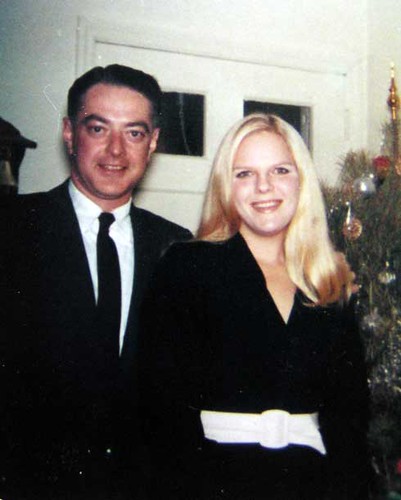
When my hair finally grew in, it proved to be worth the wait (and the insults). I was blessed with really gorgeous hair: platinum as a child, and later the color of butter. Thick, too. And shiny. (See above, at age 25.) For decades my hair was my best feature. Some days it seemed like the only good feature I possessed. It was my jewelry. I kept it long to maximize the effect and to hide behind. Most of the time I stayed away from beauty salons.

Women really shouldn't hang on to long hair forever--not unless they are willing to do the old-lady bun thing at some point. Old-lady buns and twists can be flattering if they're done right, but long hair is heavy. We don't realize just how heavy it is until we cut it off and our necks breathe a sigh of relief. For me, that happened in my early sixties. Pictures taken at my 60th birthday party show me with shoulder-length hair. I looked okay, but then at some point after that, I didn't.

The vertical lines of long hair drag the face down after a certain age. That's the best way I can describe the phenomenon that turns an attractive, long-haired woman into an old hag. Or, to state it more positively, cutting an older woman's hair brightens her face. Unless, of course, it's cut to resemble a man, or a child, or someone who had to be institutionalized.

That's frequently the way I saw my salon haircuts. My daughter once called me a "salon slut" because I could never find a stylist I wanted to stick with. I went from salon to salon, pictures clutched in my fist, reciting my preferences. "I want to look like a writer," I said. Or a photographer. Or, "I'm a creative person, and that how I want to look." In other words, don't make me look matronly. Or frumpy. Or a member of the Christian right. But that's the way I walked out of those salons almost every time.

I decided my voice was possibly to blame. I know I have a good speaking voice, because people are always commenting on it. I also know I sound calm. Sometimes calm is a real advantage. "Your voice was very good for her," the maternity nurse said to me after I'd coached my daughter through childbirth. But calm is never what I was going for with my haircuts. Nevertheless, calm is what I usually got.

I had a few good hair days. Weeks, even. My profile pic on this blog is an example. I liked that cut. But I hate to tell you how much "product" was involved in creating the look. I never thought of myself as a product kind of person, but by the time I was finished with my style primer, root lifter, and texture paste, no one would want to run their fingers through even my bangs.

Okay, I should get to the point. The point is that it took me all these years to realize that a hair style can make a face look good, but some styles make the hair look good. I made this discovery at the Yale reunion earlier this month. I had bronchitis for a couple of weeks before the event, and by the time I decided I could make the trip there was no time to get a hair appointment. I wasn't sure I wanted one anyway, as they almost always made me look (or feel) worse. So I chopped some off the bottom and took my too-long top layers and a can of Sebastian Shaper spray (very light and flexible) up to New Haven.

I received four compliments--separately--on my hair at the reunion. Before that, I don't remember the last time someone complimented me on my hair. All of the reunion compliments came from women (clearly, they had no ulterior motives). One mentioned my great haircut, but she had imbibed a fair amount of scotch beforehand. The others just talked about my hair. How soft it was, how natural. The beautiful color. (The color?? Which color--the grey or the once-was-blonde?) Listening, I was as surprised as I was delighted. Did I mention it poured rain most of the weekend? And still they thought I had beautiful hair.

I'm keeping the look. My casual non-style probably doesn't flatter my face, but it's enough for me that it flatters my hair. Although my hair is nothing like what it used to be, it's nice to have some part of it back. And today, when I was outside mowing the lawn in the wind, it actually billowed. I'm certain of it.

Sunday, June 10, 2012

Catch


When I was a child we often vacationed with family friends and their boys. Boys were drawn to my dad, with his sense of humor and ability to get a game going at a moment's notice. The game could be anything—horseshoes, badminton, cards—but it usually involved a ball. We often played a game in which we threw a ball at the porch steps and scored base hits and home runs, but sometimes we just played catch.

Does anyone play catch anymore? Perhaps it's too simple for today's kids: A person throws a ball and another person catches it. On the surface, not much stimulation there. But there's fun (and a certain satisfaction) in a good throw or a good catch, and fun, too, in bad throws and crazy misses. Plus there's the interaction between the players. Catch always, it seems, involves banter—a narration of the undercurrent of competition that exists despite the lack of an official winner or loser.

I was thinking of this today as my son pulled garlic thinnings out of the soil and lobbed them to me over the garden fence. At first I couldn't seem to be able to catch any of them, and I wondered if I'd lost my hand-eye coordination (at this point, nothing would surprise me). But then I started snagging them out of the air (as my dad would have put it). We bantered. We laughed. He threw. I caught.

When we were done I went over to the outside faucet to rinse the garlic bulbs off. My son called to me that he had one more. It was a long throw, and when I caught it between two fingers I yelled "Yay!" How many opportunities do we get to yell "Yay!" in an average day? People really ought to play more catch.


Tuesday, June 05, 2012

Another Three Days at Yale


Five years after my first attendance at my late husband's class reunion, I returned to Yale this past weekend for their 60th. This time I'd looked forward to doing the whole four days, but after two weeks of bronchitis I decided to drive up on Friday instead of Thursday, giving myself another day for my cough to subside and for me to get more rest. I wanted to be able to dance, eat, talk, and traipse all over Yale, just like last time. And I did. I had a wonderful weekend.

When I was in First Grade, our class took a walk. I don't imagine we walked very far—maybe around the large Queens block—but a permission slip was required. My mother signed the slip and sent it back to school with me that morning, but when it came time to hand it to the teacher I was too shy to stand and walk to the front of the classroom. So I stayed in my seat and didn't go on the walk.

I thought about this Saturday night as I sipped a good malbec under a huge tent in the middle of Berkeley College at Yale. At one end of the long tent, a trio played music for dancing, and couples took advantage on the raised floor alongside the musicians. At the other end, three aproned students cheerfully tended the open bar. In the middle, hundreds of happy reunioners sat at white-clothed tables or walked about, table-hopping. Every one of them wore a smile.

I smiled too. I knew the wine and the lobster dinner I'd consumed weren't entirely responsible for my feeling of well being; most of the credit went to the people at those tables and on the dance floor. Joe's classmates and their wives have been very kind to me. I met quite a few five years ago, and many more this time. And this is where my thought about shyness comes in.

It occurred to me that if I'd been shy I would have missed out on meeting so many of them. Here's an example: I arrived at the class dinner Friday night with a couple of fellow widows. By the time we'd gotten drinks at the bar, most of the tables had filled up. We found space with some other people at a table on the end, in the path of a breeze. Rain was approaching, and the temperature was dropping. My friends were wearing jackets and blazers; I was wearing a lacy 3/4-sleeve cardigan. I would have been freezing at that table. I told my friends I was going to throw myself on the mercy of strangers, and I set out to find a table with an empty chair. It took me longer than expected, but the reward at the end of my search was an excellent dinner partner I never would have met otherwise. Our conversation ranged from saguaros to sudden loss, and it was one I'll remember. I'm glad I didn't miss out.

The married gentlemen of the Class of '52 are true gentlemen, not inclined to ask a single woman to dance. But being the gentlemen they are, they won't turn a woman down if she asks. I proved this theory Saturday night with a lindy, a foxtrot, and a rhumba (and expressed my gratitude to their wives).

I met some of the nicest people just by asking if I could follow them to an event. No one turned me down, and we had some good conversations as we strolled past Yale's beautiful stone buildings.

At the class dinner one of the speakers mentioned that they'd need reunion photos for their website. I brought a camera, and figured this is the least I could do for the class that had invited me to share their event and paid my way. So on the last night I became the self-appointed "official" photographer. Another widow offered to be my "assistant." She followed me around, writing down names as I snapped pictures. We got to meet a lot of people this way.

So now I'm back home in my old farmhouse on a sparsely-populated dirt road, grateful that the first-grader paralyzed by shyness managed to grow into a pushy old broad. I'm thinking this is a quality I should be able to use more often than once every five years. Beyond the perimeter of my acreage are people—people who write, people who garden, people who enjoy laughing, games, music, and the company of other people. Singers. Scientists. People who know how to do things I never heard of. I think it's time to plan how I might meet some of them.


Wednesday, May 09, 2012

The Possum Poem


So Gerald Stern wrote a poem
about road kill, a poem
everybody seems to know,
but I wonder if everybody thinks
about it quite as often as I do.
His poem is about an opossum
with a hole in its back “and the wind
blowing through his hair,” dead
on the road. Stern says he will
“behave like a Jew” and touch
the opossum’s face, stare into his eyes,
and pull him off the road.

After dark, after I’ve locked
the front door for the night,
after the outside cat has retreated
to her cozy shelter, I hear her
food dish banging on the porch.
It is pushed, flipped, slid, and flipped again,
its stainless steel racket pulling me
to the front door knowing
what I’ll find.

I turn on the light and lean against
the glass to see an opossum with its nose
in the dish—eating, or pushing it in a last-ditch
effort to extract every morsel from this
civilized meal. Sometimes the animal
is intact, and sometimes I see
the one whose back has been scalped.

I once knew a man who raised
baby opossums rescued from the pouches
of road-killed mothers. He explained
that opossums seek out macadam
because it retains the day’s heat.
Opossums have cold feet.

My feet get cold, too. I go through
boxes of foot warmers every winter.
I’m lucky. I can slap them on my socks
and walk around the house without fear
that two tons of metal will run me down
in my kitchen. But there she is,
the possum mama, nourishing her babies,
trying to get comfortable
in the only way she knows how.
And along come those bright lights,
that big noise, but her movements
are slow, way too slow
for 300 bullying horsepower.

I don’t know where Gerald Stern lives,
or how many opossums he has seen
on the road. I live in the country,
and see them on almost a daily basis.
Maybe it’s because there’s rarely room
to pull over, or maybe it’s because I’m only
one-quarter Jewish, but I’ve never
moved a dead opossum out of further
harm’s way. I like that he did, though.

But for now I set out a clean food dish
on the porch every morning,
wash the possum bathtub
I used to call the water dish, and keep
the cat food coming. When I lean
against the glass and see the one
with the skinned back, I tell her I'm glad
she survived to enjoy these meals.
We each do what we can.

Wednesday, April 25, 2012

Deadlines Big and Small

I mentioned on Facebook today that my writing group is valuable because it makes me accountable. We meet every two weeks, and I'm expected to bring three pages of my middle-grade novel-in-progress for critiquing. We've been meeting for several months now, and so far I've shown up with the required pages in hand. Sometimes these pages are written the day of the meeting. Did I say "sometimes"? Most of the time these pages are written a few hours before the meeting starts.

The group is great. There are four of us, all writing in the same genre and each writing quite differently. One of us has a great deal of experience with children's literature and is well published. I hope she's getting something out of these meetings, because she certainly gives a lot. The others have less experience, but are good writers and insightful readers.

However, I realized today (and I'm surprised it took me so long) that if I write this book at the rate of three double-spaced pages every two weeks, it'll take me years. And that's just for the first draft! I must speed up the process.

The other thing I mentioned on Facebook is a handy little download called Freedom (available from macfreedom.com). Costing $10, this little program sits on your monitor waiting for you to summon it. You do this when you need to accomplish something requiring your undivided attention--undivided, that is, by Words With Friends games, forum postings, commenting on someone's Facebook photo, research on ticks (or whatever), or the irresistible desire to check your email. Freedom cuts off your access to the Internet.

Once you set it for a certain amount of time (one writer recommends three hours, but my usual is 45 minutes), you are truly cut off from anything happening online. Freedom is a tough little program; you can't get around it, so don't bother trying.

So . . . now that I know the secret of productivity, I'll have to put it to use more often. Just how often is something I've yet to figure out.

Saturday, April 14, 2012

While I've been holed up in the house.....

I'm still in freaked-by-ticks mode, and haven't been venturing out much, although that will probably change (cautiously) now that the weather has warmed again. But in the cool temperatures of the past few weeks I embarked on a project I've been thinking about for awhile.

Last year I bought a footstool at an antique shop. It cost only $21, and was probably a circa 1960 "antique," but I liked its sturdy, simple lines. I didn't like the fabric that covered it, and planned to change it right away. Well, we know how those things go.

Here's how it looked when I bought it (and used it for many months). Note how crappy the pink and green fabric looks against the Persian rug it's sitting on:

Photobucket

So last month I rather impulsively sketched out a design I felt would work with the rug without actually copying it, and then (this is the fun part) dove into my large stash of wool to pick out colors. I often play with colors by dyeing or overdyeing, but this time I wanted to use as-is colors and make the project go quickly. Then I started hooking. (That's fun too.)

I had a hard time figuring out the exact dimensions of the design. It's not as though I were covering something flat; the footstool had padding, and the hooked design would have to cover the top and a bit of the sides as well. I didn't have a lot of confidence that it was going to work.

When I finished it, or guessed I had, it was time to operate on the existing cover. I removed a zillion staples......

Photobucket

And peeled the pinky-greeny fabric off, along with a layer of dried, crumbling foam rubber. This was underneath:

Photobucket

Sort of sweet, isn't it? But it doesn't go any better with the rug (or anything else in the house) than the first fabric did. So I removed some more staples and peeled the chrysanthemums off as well.

For padding, I cut two pieces of latex left over from trimming a 1" latex mattress pad. I covered the rectangular block of wood with one and put a narrower strip on top, creating the slightly domed effect I was going for. Then I placed my hooked design on top. I discovered that I hadn't left quite enough of the burlap on all sides. What I should have done at this point was to sew strips of brown wool around the hooking to create an ample border. But I didn't.

Instead, I made good use of my son's staple gun. For those who don't already know this, adding staples is a lot more enjoyable than removing them.

Here's the finished footstool. It's not perfect, but it looks good on three out of four sides. For a first effort, I'll take it. I'm happy with the way it looks on the rug.

Photobucket